

How Does Sedation Dentistry Work in Knoxville, TN?
Take the Anxiety Out of Your Dental Visit
If the thought of sitting in a dental chair makes your stomach drop, you’re not alone — and you don’t have to just push through it. Sedation dentistry exists specifically for people like you. Whether you have a diagnosed dental phobia, sensitive teeth, a strong gag reflex, or simply haven’t been to the dentist in years and aren’t sure what to expect, sedation dentistry can make your appointment something you actually get through — comfortably, calmly, and without white-knuckling the armrests.
At Fountain City Smiles in Knoxville, TN, Dr. Patel and our team use dental sedation to help patients from Fountain City, Amherst, Marble City, Powell, Halls, and West Knoxville get the care they need without the stress that’s been holding them back. Contact Fountain City Smiles at (865) 687-8670 to schedule your consultation with our Knoxville dentist.
What Is Sedation Dentistry and How Does It Work?
Sedation dentistry, sometimes called sleep dentistry or comfort dentistry, involves the use of safe, medically approved medications that help you feel relaxed, calm, and comfortable during a dental procedure. Despite the nickname “sleep dentistry,” most forms of sedation don’t put you fully to sleep. You’re typically conscious, able to breathe on your own, and able to respond to simple questions—you just don’t feel anxious, you may not feel the passage of time, and in many cases, you won’t remember much of the appointment afterward.
Here’s the science behind it: sedative medications work by depressing activity in the central nervous system—the part of your brain responsible for triggering the fight-or-flight fear response. That’s why sedated patients often describe their experience as feeling like the appointment went by in minutes, or like they were in a deeply relaxed, dreamlike state. The medication doesn’t eliminate the need for local anesthetic (you’ll still be numbed in the treatment area), but it removes the emotional and psychological stress that makes dental visits so difficult for so many people.
The right type of sedation depends on your anxiety level, your medical history, the length of your procedure, and your personal preferences. Dr. Patel will review all of this with you before recommending anything.
Types of Sedation Dentistry We Offer Near You in Knoxville
Sedation dentistry isn’t a one-size-fits-all solution—and that’s actually a good thing. There are several levels of sedation available at our Knoxville dental office, ranging from mild relaxation to deeper sedation for more complex procedures.
1. Nitrous Oxide (Laughing Gas) — Mild Sedation
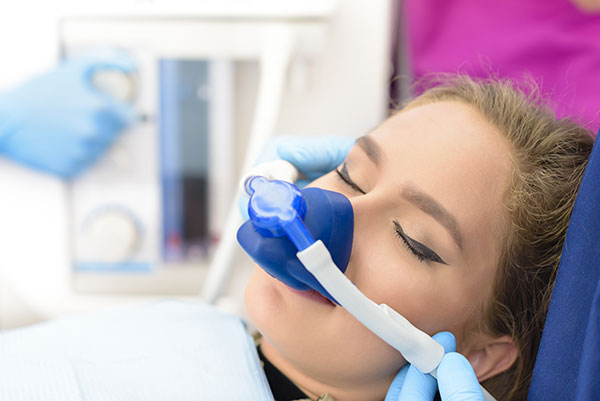
Nitrous oxide is the lightest form of dental sedation and the most commonly used. You’ve probably heard it called “laughing gas.” A small, comfortable mask is placed over your nose, and within three to five minutes of breathing in the nitrous oxide-oxygen blend, you’ll notice a warm, calming sensation spreading through your body. Some patients report feeling lighthearted or slightly euphoric — hence the nickname.
What makes nitrous oxide unique is its reversibility: the moment we switch you to pure oxygen at the end of your appointment, the effects begin wearing off almost immediately. Most patients can drive themselves home after a nitrous oxide appointment. It leaves your system quickly, and there’s no lingering grogginess.
Nitrous oxide is an excellent option for:
- Mild to moderate dental anxiety
- Shorter procedures like dental cleanings, fillings, or simple extractions
- Patients who need to drive after their appointment
- Children or patients who are nervous but not severely phobic
One thing to note: while nitrous oxide effectively reduces anxiety and increases pain tolerance, it does not cause significant memory loss. You’ll remember the appointment—you just won’t have dreaded it.
2. Oral Conscious Sedation — Moderate Sedation
Oral conscious sedation is a step up from laughing gas, and it’s one of the most popular options for patients with moderate-to-severe dental anxiety. It involves taking a prescription sedative pill (typically from the benzodiazepine family—medications like Halcion/triazolam, lorazepam, or Zaleplon) about one hour before your appointment.
By the time you arrive at our Knoxville office, the medication will already be working. You’ll feel drowsy, deeply relaxed, and unconcerned about the procedure. You’ll remain conscious and able to respond to Dr. Patel if needed, but most patients describe feeling like they’re “floating”—aware that something is happening but not bothered by it at all.
One of the biggest benefits of oral conscious sedation? Most patients have little to no memory of the procedure afterward. This amnesic effect is particularly meaningful for people who have had traumatic dental experiences in the past—you can essentially “reset” your relationship with dental care.
Important: because oral sedation continues to affect your coordination and reaction time for several hours, you will need a trusted adult to drive you to and from our office. Plan to take it easy for the rest of the day.
Oral conscious sedation is well-suited for:
- Moderate to severe dental anxiety or dental phobia
- Patients who want little to no memory of their appointment
- Longer or more involved procedures
- People who haven’t been to the dentist in years
- Patients with a sensitive gag reflex
3. IV Sedation — Deep Sedation
IV sedation delivers sedative medication directly into your bloodstream through a small intravenous line, which means the effects are felt almost immediately and can be precisely controlled and adjusted throughout your procedure. This is the deepest level of sedation we offer at Fountain City Smiles and is typically reserved for more extensive dental work or patients with extreme anxiety.
Under IV sedation, you’ll be in a state sometimes called “twilight sedation”—on the edge of consciousness. Most patients have virtually no memory of the procedure and may feel like only a few minutes passed, even during a lengthy appointment. You’ll be able to breathe on your own and respond to prompts, but you’re deeply relaxed throughout.
Because IV sedation offers such precise control, Dr. Patel can easily adjust the depth of sedation at any point during treatment. A driver is required, and we recommend planning to rest at home for the remainder of the day.
IV sedation is ideal for:
- Complex or lengthy procedures (implant placement, multiple extractions, oral surgery)
- Patients with extreme dental phobia
- Patients who’ve tried oral sedation and need deeper relaxation
- People who require significant dental work in a single visit to minimize appointments
4. General Anesthesia — Full Unconsciousness
General anesthesia renders you completely unconscious for the duration of the procedure. Unlike the other forms of sedation, you will not be able to respond to stimuli and will have no awareness or memory of the appointment. This level of sedation is reserved for the most complex dental surgeries and is administered and monitored by a qualified anesthesia provider.
5. Local Anesthetics — Pain Relief (Not Sedation)
Local anesthetics aren’t sedation, but they work alongside sedation to create a complete comfort experience. A numbing medication is injected directly into the treatment area to eliminate pain sensation during the procedure. If needles make you nervous, oral sedation beforehand often makes the injection itself a non-event—many sedated patients don’t even notice it.

How the Sedation Dentistry Process Works at Our Knoxville Office
Wondering what actually happens from start to finish? Here’s a clear walkthrough of the entire sedation dentistry process at Fountain City Smiles.
Before any sedation is scheduled, Dr. Patel conducts a thorough review of your medical history, current medications, allergies, and overall health. This is the most important step — it ensures that the sedation method and dosage we choose are completely safe for you specifically. Not every sedation option is appropriate for every patient, and factors like weight, age, certain health conditions, and current medications can all affect which option is right for you.
During this consultation, you’ll have the opportunity to ask every question you have, share any past negative experiences, and express your preferences. There’s no judgment here—Dr. Patel and our team have helped hundreds of anxious Knoxville patients through this process.
If you take regular medications, we’ll advise you specifically on whether to take them the day of your procedure. We’ll also give you detailed pre-appointment instructions, including fasting guidelines (most sedation methods require you not to eat or drink for a period of time beforehand to prevent complications—typically 6–8 hours for IV or general anesthesia, though nitrous oxide typically has no fasting requirement).
For oral sedation, you’ll receive a prescription to fill before your appointment. You’ll take the pill approximately one hour before arriving at our office. Because the medication will already be working when you get here, arrange for someone to drive you — you should not operate a vehicle.
For nitrous oxide, no special preparation is needed. You can eat beforehand and drive yourself home.
For IV sedation or general anesthesia, you’ll receive detailed written instructions, and your driver should plan to stay at the office or be reachable nearby.
When you arrive, our team will get you settled comfortably in the treatment chair. The sedation is then administered:
- Nitrous oxide: The mask is placed over your nose, and you begin breathing normally. Effects begin within 3–5 minutes.
- Oral sedation: Already working from the pill you took at home — we’ll confirm you’re feeling the effects before beginning.
- IV sedation: A small catheter is placed in a vein (usually in your arm or hand). Medication is administered and takes effect almost immediately.
Throughout your entire appointment, Dr. Patel and our clinical team will continuously monitor your vital signs—including blood pressure, heart rate, oxygen saturation, and respiratory rate. This monitoring is not passive; a trained member of our team is actively watching these readings throughout the procedure to ensure your safety at every moment. Safety is never assumed—it’s actively maintained.
Once you’re comfortably sedated, Dr. Patel performs the necessary dental work. Because you’re relaxed and comfortable, he’s also able to work more efficiently—meaning in many cases, we can complete work in a single appointment that might otherwise require multiple visits. For patients who’ve been putting off care for years, this is often a game-changer.
When the procedure is complete, you’ll be moved to a comfortable recovery area and monitored until you’re stable, alert enough to communicate clearly, and ready to be discharged. How long this takes depends on the type of sedation used:
- Nitrous oxide: Recovery is nearly immediate — most patients are fine within minutes.
- Oral sedation: You may feel drowsy for several hours. Plan to rest at home for the remainder of the day.
- IV sedation: Similar to oral sedation — expect to feel groggy for a few hours. You should not return to work or make important decisions the day of your procedure.
Before you leave, we’ll provide written post-sedation care instructions. These typically include guidance on eating and drinking, activity restrictions, when it’s safe to drive, and what to do if you have any concerns. We’ll also schedule any necessary follow-up care.
Who Is a Good Candidate for Sedation Dentistry Near Knoxville?
Sedation dentistry isn’t only for people with severe dental phobia—it’s a tool for anyone whose comfort, health, or circumstances make standard dental care difficult or unpleasant. You may benefit from sedation dentistry at our Knoxville office if you:
- Experience dental anxiety or dental phobia. This is the most common reason patients seek out sedation. If you feel your heart racing in the waiting room, avoid making appointments even when you know you need care or have had a panic attack at the dentist before—sedation can genuinely change your experience.
- Have a strong or sensitive gag reflex. A hyperactive gag reflex can make even routine cleanings and X-rays extremely uncomfortable. Sedation calms the reflex response, making procedures far more manageable.
- Have a low pain threshold or heightened dental sensitivity. Some people simply experience more discomfort during dental work than others. Sedation works alongside a local anesthetic to create a fuller, more complete comfort experience.
- Need complex, lengthy, or multiple procedures. If you need a lot of work done — whether that’s multiple fillings, extractions, implant placement, or a full mouth restoration — sedation allows us to work more efficiently and complete more treatment in a single appointment. Fewer visits, less disruption to your schedule.
- Haven’t been to the dentist in a long time. There’s no judgment from us, but we know the anxiety of returning after years away can feel overwhelming. Sedation dentistry gives you a way back in without having to white-knuckle it.
- Have had a traumatic dental experience in the past. Past trauma can create lasting fear that makes even thinking about dental appointments distressing. Sedation — particularly options with amnesic effects — can help you break that cycle.
- Are neurodiverse or have difficulty sitting still. Patients with ADHD, autism spectrum disorder, or other conditions that affect the ability to remain still for extended periods can benefit significantly from sedation. Our team is experienced in creating a calm, supportive environment for neurodiverse patients.
- Have sensitive teeth or gums. If even routine care causes discomfort, sedation can help manage that sensitivity and make cleanings and procedures more tolerable.
Is Sedation Dentistry Safe?
Yes—when administered by a properly trained and credentialed dental professional, sedation dentistry is very safe. Dr. Patel has extensive training in sedation techniques and strictly follows all Tennessee dental sedation guidelines and protocols.
Before recommending any sedation, we review your complete medical history and current medications to identify any contraindications or interaction risks. During your procedure, your vital signs are monitored continuously by our team. We are equipped and trained to respond quickly to any changes.
As with any medical procedure or medication, there are always some potential risks — but for the vast majority of patients in good general health, sedation dentistry carries a very low risk profile. If you have underlying health conditions such as hypertension, respiratory issues, or metabolic concerns, we take extra precautions and may consult with your primary care physician before proceeding.
We will always be transparent with you about risks, alternatives, and what to expect. Your safety is the starting point for every decision we make.

Sedation Dentistry for Dental Anxiety in Knoxville: You’re Not Alone
Dental anxiety is far more common than most people realize. Surveys consistently show that around 73% of adults experience some degree of dental anxiety. In East Tennessee, like everywhere else, this translates to a significant number of people going without care they know they need.
If you’ve been in that category—putting off a cleaning for two years, living with a toothache rather than making an appointment, or making appointments you cancel last-minute—sedation dentistry is a real, accessible solution. Our patients at Fountain City Smiles regularly tell us that their first sedated appointment fundamentally changed how they think about dental care. Many who spent years avoiding us are now on a regular schedule.
Frequently Asked Questions
It depends on the type of sedation. For nitrous oxide, there are generally no fasting restrictions. For oral sedation, IV sedation, or general anesthesia, you’ll typically need to avoid food and drink for 6–8 hours beforehand to reduce the risk of complications. Dr. Patel will give you specific instructions at your consultation.
With nitrous oxide, you’ll likely remember the appointment but won’t have been anxious during it. With oral conscious sedation or IV sedation, most patients have little to no memory of the procedure. This is one of the most valued effects for patients with dental anxiety or past trauma.
Safety is always our top priority. Conditions like hypertension, diabetes, sleep apnea, or respiratory issues require extra attention before sedation. Dr. Patel will review your full health history and, when appropriate, coordinate with your primary care provider before recommending any sedation method. We take no shortcuts here.
Many patients on regular medications can safely receive dental sedation, but some medications can interact with sedatives. This is exactly why we conduct a thorough medical history review before recommending any sedation option. Don’t stop any medications without consulting your doctor — just bring your full medication list to your consultation.
Ready to See a Sedation Dentist Near You in Knoxville?
If fear, anxiety, or a difficult past dental experience has been keeping you from the care you need, our team at Fountain City Smiles is here to help. Dr. Patel and our staff have helped hundreds of patients from Knoxville and surrounding areas, including Amherst, Whispering Hills, Marble City, Fountain City, Powell, and Halls, finally get comfortable dental care.
Call us today at (865) 687-8670 or fill out our online form to request a consultation. We’ll answer your questions, explain your sedation options, and build a plan that actually works for you. You deserve a Knoxville dentist near you who makes going to the dentist feel manageable. That’s what we do.