

Are You a Candidate for Dental Implants in Knoxville, TN?
What Makes You a Good Candidate for Dental Implants in Knoxville
If you’re missing one or more teeth, you’ve probably searched “dental implants near me“ and landed on a dozen pages telling you implants are the gold standard—but not whether you actually qualify. The honest answer: most healthy adults are candidates, but a few specific factors decide it, and the only way to know for certain is a consultation with a qualified dentist in Knoxville who can evaluate your jawbone, gums, and health history directly.
Generally, the best candidates for dental implants have healthy gums free of periodontal disease, enough jawbone density to anchor the titanium implant post, and no uncontrolled systemic health conditions that would interfere with healing. If any of that sounds uncertain for you, don’t rule yourself out — many patients who aren’t ideal candidates on day one become excellent candidates after a short preparatory procedure.
To find out where you stand, contact our Knoxville implant dentist and schedule a candidacy evaluation at (865) 687-8670. We welcome patients from Fountain City, Dry Gap, West Knoxville, Whispering Hills, and surrounding areas.
Why Choose Fountain City Smiles as Your Knoxville Implant Dentist?
Finding a trustworthy dentist near you for a procedure as important as dental implants matters. At Fountain City Smiles, our Knoxville dentists combine digital imaging technology with an unhurried, honest consultation process—we’d rather tell you upfront if you need a bone graft first than rush you into a placement that’s likely to fail. We proudly serve patients throughout Knoxville and the surrounding communities of Amherst, Marble City, and West Knoxville.

What Determines Dental Implant Candidacy?
Our Knoxville dentist near you evaluates several factors before recommending dental implants. Each one affects how well the implant will fuse with your jawbone (a process called osseointegration) and how likely the restoration is to last.
1. Sufficient Bone Density
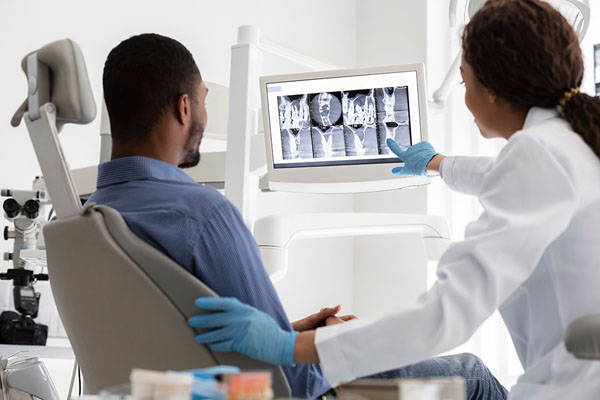
Dental implants rely on the surrounding alveolar bone for stability—the titanium post needs enough healthy bone to fuse to, the same way a fence post needs solid ground. When a tooth has been missing for a while, the jawbone in that area naturally begins to shrink from lack of stimulation. We use X-rays or a CT scan to measure bone volume and density before recommending treatment, and if there isn’t enough, a supplemental procedure like a bone graft can usually build the site back up.
2. Healthy Gums
Active gum disease is one of the most common reasons a patient isn’t an immediate candidate. Because the implant needs healthy tissue and bone to integrate properly, any periodontal disease or oral infection has to be treated and resolved first. The good news is that once your gums are healthy, most patients move forward with implant placement without further delay.
3. Good Overall Health
Since implant placement is a minor surgical procedure, your body’s ability to heal matters. Conditions like uncontrolled diabetes, heart disease, or autoimmune disorders can affect healing and increase implant failure risk—but “uncontrolled” is the keyword. Many patients with well-managed chronic conditions are still excellent candidates; your dentist will simply coordinate with your physician if needed.
4. Consistent Oral Hygiene
Long-term implant success depends on the same habits that protect natural teeth—daily brushing, flossing, and regular cleanings. We’ll review your oral hygiene routine and offer guidance if there’s room to improve it before moving forward.
5. Age and Jaw Development
Implants require full jawbone growth, which is why they’re generally not placed in children or teens whose jaws are still developing. Most adults have no age-related barrier to candidacy; implants are routinely placed for patients well into their 70s and 80s, as long as they’re in good health.
6. Medications, Including Bisphosphonates
Certain medications, particularly bisphosphonates prescribed for osteoporosis, can affect bone healing and raise the risk of complications. We’ll review your full medication history as part of your evaluation.
7. Smoking and Alcohol Use
Smoking slows healing and is one of the leading risk factors for implant failure, since it restricts blood flow to the gum and bone tissue. Patients who smoke aren’t automatically disqualified, but we typically recommend quitting or cutting back significantly before and after surgery to protect your investment.
8. Financial and Insurance Considerations
Dental implant cost and insurance coverage vary widely, so we walk through financing options as part of your consultation—cost shouldn’t be a mystery before you decide if implants are right for you.
9. Realistic Expectations
Implants look, feel, and function like natural teeth, but they’re not instant. Dental implant treatment typically spans several months from placement to final crown. Understanding that timeline upfront leads to a much better experience.
10. Commitment to Aftercare
Success depends on following post-placement implant care instructions, attending healing check-ups, and maintaining oral hygiene throughout recovery.
Not an Ideal Candidate Yet? Here’s How We Fix That
Bone loss or thin gum tissue doesn’t mean implants are off the table—it usually just means an extra step first. Our Knoxville implant dentist explains that there are several supplemental procedures to prepare the site for a successful placement:
- Bone Grafting: Rebuilds jawbone volume in areas where density has been lost, giving the implant a stable foundation.
- Sinus Lift: Raises the sinus floor to create room for implants in the upper back jaw, where bone is often naturally thinner.
- Ridge Augmentation: Widens or rebuilds a narrow jaw ridge so it can properly support an implant.
Most patients who need one of these procedures go on to become excellent implant candidates once healing is complete.
If Implants Aren’t Right for You, You Still Have Options
Dental implants aren’t the only path to a full, functional smile. If implants aren’t the best fit for your health, budget, or timeline, dental bridges and other restorative options can still effectively replace missing teeth. We’ll walk through every option honestly during your visit—our goal is the right solution for you, not a one-size-fits-all recommendation.
Frequently Asked Questions
Not immediately—active gum disease or an untreated oral infection needs to be resolved first, since implant placement requires healthy gum tissue and bone. Once treated, most patients are cleared to move forward.
Not necessarily. Smoking increases healing time and implant failure risk, so your dentist will evaluate your overall oral health and smoking history together and may recommend quitting or reducing use around the time of surgery.
Patients with poorly controlled systemic diseases (diabetes, Parkinson’s, or certain autoimmune disorders) or significant untreated bone loss face a higher risk of complications. In many cases, treating the underlying condition or adding a bone graft resolves the issue.
Fountain City Smiles offers dental implant candidacy evaluations at our Knoxville, TN office, conveniently serving patients in Amherst, Marble City, West Knoxville, and the greater Knoxville area. Call (865) 687-8670 to schedule.
A candidacy evaluation, including imaging and a review of your health history, is typically completed in a single consultation visit, so you’ll leave knowing exactly where you stand and what (if anything) needs to happen before implant placement.
Schedule Your Dental Implant Candidacy Evaluation in Knoxville, TN
The only way to know for certain if you’re a candidate for dental implants is a consultation with a Knoxville dentist who can evaluate your bone density, gum health, and medical history in person. Contact Fountain City Smiles today at (865) 687-8670 to schedule your evaluation—we’ll walk you through every step and every option.
Our Knoxville implant dentist welcomes patients throughout Knoxville and the surrounding communities of Dry Gap, Marble City, Dutch Valley, Whispering Hills, and West Knoxville, TN.