

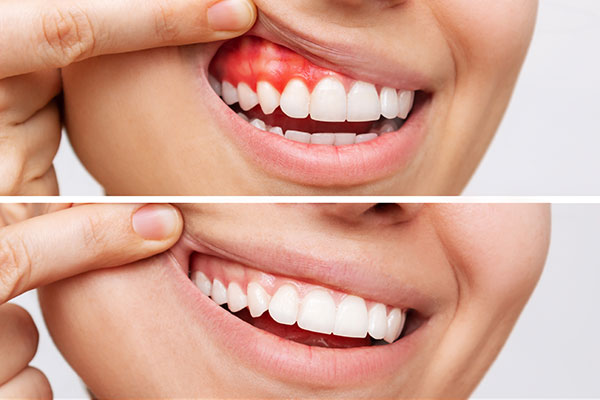
The Truth About Genetics, Prevention, and What’s Actually in Your Control
“It runs in my family” is one of the most common things patients say when they’re diagnosed with gum disease—and it’s not entirely wrong. But genetics rarely tells the whole story. For most patients, the bigger factor isn’t DNA. It’s the routine professional cleaning that got pushed back six months, then a year, then longer.
Dr. Niral Patel and the team at Fountain City Smiles see this pattern often: someone assumes their bleeding gums or early bone loss is hereditary and unavoidable, when in reality, consistent professional cleanings and early intervention would have kept the disease from ever progressing. Understanding the difference matters because it changes both how you protect your gums and what you can expect to pay if treatment becomes necessary.
Contact our Knoxville dental practice at (865) 687-8670 to schedule your dental appointment.
Does Genetics Actually Play a Role in Gum Disease?
Yes—to a point. Research has identified genetic factors that can make some people more susceptible to inflammation and faster tissue breakdown when plaque bacteria are present. If a parent or sibling has struggled with periodontal disease, you may have a somewhat higher baseline risk.
But genetic susceptibility is not the same as genetic certainty. Genes can load the gun, but plaque and tartar buildup are what pull the trigger. Even patients with a family history of gum disease can often avoid it entirely or catch it at the reversible gingivitis stage, with regular checkups and good home care. The research on gum disease is far more consistent on this point: prevalence is driven overwhelmingly by prevention habits, not bloodlines.

What the National Numbers Actually Show
The scale of gum disease in the U.S. makes it clear that this isn’t a rare hereditary condition—it’s a widespread, largely preventable one. According to the CDC, about 4 in 10 U.S. adults aged 30 and older have some level of periodontitis, ranging from mild to severe. Broken down by gender, roughly 1 in 2 men and 1 in 3 women 30 and older have some form of the disease.
If gum disease were mostly genetic, you wouldn’t expect to see rates that high and that consistent across the general population. What you would expect and what the data actually shows is a condition strongly tied to how consistently people get professional cleanings, how well they manage plaque at home, and how early problems get caught.
The Real Risk Factors (Most of Which You Can Control)
Alongside family history, dentists watch for several other risk factors that push patients toward periodontitis:
- Skipped or infrequent cleanings. Plaque hardens into tartar within days, and tartar can only be removed professionally—brushing and flossing alone won’t reverse it once it’s established below the gumline.
- Smoking or tobacco use. One of the strongest modifiable risk factors for periodontal disease.
- Diabetes and other inflammatory conditions. These can make gum tissue more vulnerable to infection.
- Inconsistent home care. Irregular brushing and flossing let plaque bacteria build up faster than the body can manage.
- Hormonal changes. Pregnancy, menopause, and other hormonal shifts can temporarily increase gum sensitivity to plaque.
Notice how many of these are habits and choices rather than fixed traits. That’s the encouraging part: even if you have a genetic predisposition, most of the other risk factors are things you can actively manage.
Why “It’s Genetic” Can Be an Expensive Assumption
Here’s where genetics and cost intersect. Patients who assume gum disease is simply inevitable often delay treatment—and delay is what turns an inexpensive problem into a costly one.
- Reversing early gingivitis with a professional cleaning typically runs $50–$150.
- Scaling and root planing (deep cleaning) for early periodontitis runs $200–$480 per quadrant.
- Left untreated, advanced periodontitis can require pocket reduction surgery, bone grafting, or LANAP laser therapy — procedures that can run $1,000–$5,000 per quadrant, or well into five figures for full-mouth cases.
- If a tooth is ultimately lost to advanced gum disease, replacing it with a dental implant starts at $2,300+ per tooth.
In other words, the “genetic” excuse can end up costing thousands of dollars more than simply keeping up with cleanings would have. You can see the full breakdown of pricing by treatment stage on our gum disease treatment cost page.
What You Can Do Starting Today
Whether or not gum disease runs in your family, the same steps protect you either way:
- Keep every six-month cleaning or more frequent periodontal maintenance visits if you’ve already been diagnosed with gum disease.
- Brush twice daily and floss once daily, focusing on the gumline where plaque collects.
- Tell your dentist about your family history. If close relatives have had periodontal disease, your hygienist can monitor you more closely and catch early changes before they progress.
- Don’t ignore early warning signs. Bleeding gums, persistent bad breath, or gum recession are your cue to get evaluated, not to wait it out.
- Manage related health conditions, like diabetes, and avoid tobacco use, since both significantly raise periodontal risk.
Genetics Loads the Risk—Prevention Decides the Outcome
If you have a family history of gum disease, that’s useful information for your dental team, not a reason to assume the worst. Most patients who stay consistent with cleanings and home care avoid periodontitis altogether, regardless of what runs in the family.

Don’t Let “It’s Genetic” Cost You Thousands. See a Knoxville Dentist Today!
If it’s been a while since your last cleaning, or you’re noticing bleeding gums, bad breath, or gum recession, don’t wait to find out whether it’s genetics or simply time for a checkup. Dr. Niral Patel and the team at Fountain City Smiles offer thorough periodontal evaluations and transparent pricing for patients throughout Knoxville, Dry Gap, Marble City, Dutch Valley, Whispering Hills, and West Knoxville, TN.
Call (865) 687-8670 to schedule your gum disease evaluation, or visit us at 2944 Tazewell Pike #2, Knoxville, TN 37918. We’ll tell you honestly what’s driving your gum health—and what it will take, and cost, to protect it.